Understanding the Blockchain Ecosystem

Understanding the Blockchain Ecosystem
The blockchain ecosystem has emerged as a revolutionary technology, reshaping industries and offering innovative solutions across various sectors. According to a Statista report, the global blockchain market is projected to grow from $3 billion in 2020 to over $39 billion by 2025, highlighting significant opportunities and challenges within this growing field.
What is the Blockchain Ecosystem?
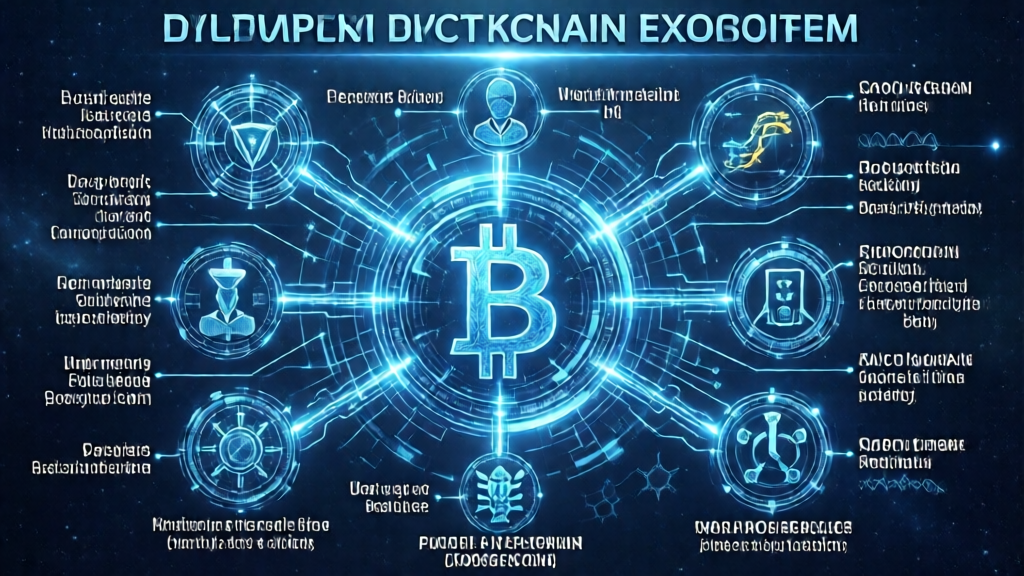
At its core, the blockchain ecosystem consists of several components that work together to create a decentralized digital ledger system. Each component plays a crucial role:
- Nodes: These are individual computers connected to the blockchain network, which validate and record transactions.
- Smart contracts: These self-executing contracts define the rules of an agreement directly written into code.
- Tokens: Tokens represent digital assets on the blockchain, enabling value exchange within the network.
- Decentralized applications (dApps): These applications run on a peer-to-peer network rather than being hosted on centralized servers.
So, here’s the catch: Understanding how these components interact is essential for grasping the full scope of the blockchain ecosystem.
Key Players in the Blockchain Ecosystem
The blockchain ecosystem is not just about technology; it’s also about the people and organizations driving its development. Some key players include:
- Developers: The backbone of any blockchain project, responsible for creating and maintaining the protocol.
- Miners: Individuals or entities that validate transactions and are rewarded with tokens for their efforts.
- Investors: Those who provide capital to blockchain projects, often through token sales or venture funding.
- Regulators: Government bodies that set the rules and regulations guiding blockchain operations.
As you can see, the interconnection between these players contributes to a dynamic and evolving ecosystem.
The Importance of Decentralization
Decentralization is a fundamental principle of the blockchain ecosystem. It ensures transparency, security, and resilience against censorship. Let’s break it down further:
- Transparency: Every transaction is recorded on a public ledger, making it accessible for anyone to view.
- Security: The distributed nature of the network makes it nearly impossible for a single entity to alter information without consensus.
- Censorship resistance: Once a transaction is recorded, it cannot be undone or blocked by any authority.
These features not only enhance trust but also encourage wider adoption of blockchain technology.
Real-World Applications of Blockchain
Various industries are exploring blockchain applications beyond cryptocurrencies:
- Finance: Blockchain provides faster settlement times and reduced transaction costs.
- Healthcare: Secure patient data sharing through immutable records improves care quality.
- Supply chain: Enhanced traceability and transparency aid in tracking products from origin to consumer.
- Real estate: Simplifying property transactions through tokenized assets reduces bureaucracy.
For example, Walmart has implemented blockchain technology in its food supply chain to enhance traceability, resulting in a 40% reduction in the time it takes to trace produce.
Challenges Facing the Blockchain Ecosystem
Despite its potential, the blockchain ecosystem faces several challenges:
- Scalability: Many blockchain networks struggle to process a high volume of transactions quickly.
- Regulatory concerns: The lack of comprehensive legislation can hinder growth and innovation.
- Energy consumption: Mining operations, particularly in proof-of-work systems, require substantial energy.
Addressing these challenges will be crucial for the long-term viability of the blockchain ecosystem.
The Future of the Blockchain Ecosystem
The blockchain ecosystem continues to evolve, driven by technological advancements and increasing market demand. Experts predict a shift towards more sustainable solutions and interoperability among different blockchain networks. For instance, the rise of layer-two scaling solutions like Lightning Network aims to address scalability concerns by enabling faster transactions.
Additionally, the integration of artificial intelligence and Internet of Things (IoT) technologies with blockchain could further enhance its applications across various sectors.
Conclusion
In conclusion, the blockchain ecosystem represents a transformative force in technology and industry. From its decentralized nature to its real-world applications, understanding this ecosystem is essential for navigating the future digital landscape. As we move forward, staying informed about advancements and challenges will help stakeholders across the board leverage blockchain’s potential. Remember, this journey is just beginning, and there’s much more to learn about the blockchain ecosystem.
Whether you are an investor, developer, or simply curious about blockchain technology, embracing this ecosystem can open doors to vast opportunities. techcryptodigest is your reliable resource for staying updated on all things blockchain.