Understanding zk Rollups: A Comprehensive Overview

Understanding zk Rollups: A Comprehensive Overview
In the wake of soaring gas fees and network congestion, the Ethereum blockchain has seen $4.1B lost to DeFi hacks in 2024. This has spurred interest in Layer 2 solutions like zk Rollups. So, what are zk Rollups, and how do they play a crucial role in optimizing blockchain scalability?
What are zk Rollups?
To put it simply, zk Rollups are a layer 2 scalability solution that allow transactions to be bundled, or “rolled up,” off-chain before being sent on-chain in a single transaction. This significantly reduces the amount of data stored on the main blockchain, thus providing enhanced transaction throughput and low fees.
How zk Rollups Work
- Proof Generation: zk Rollups utilize zero-knowledge proofs (ZKPs), which enable one party to prove to another that a given statement is true, without revealing any information other than the fact that this statement is true.
- Batching Transactions: By gathering numerous transactions into a single batch, zk Rollups reduce the computational load on the Ethereum mainnet. This not only speeds up the processing time but also minimizes gas fees.
- Merkle Trees: A key component of zk Rollups, these trees secure the rolled-up transactions, providing a structure for quick verification while maintaining decentralization.
The Advantages of zk Rollups
Let’s break down some of the main advantages of zk Rollups:
- Scalability: zk Rollups can process thousands of transactions per second, which is a significant leap forward compared to on-chain transaction speeds.
- Reduced Fees: By compressing transactions, users benefit from lower fees, making it accessible for a wide range of activities from DeFi to NFT trading.
- Enhanced Privacy: Zero-knowledge proofs provide a layer of privacy, allowing users to transact without disclosing personal data.
Real-World Use Cases of zk Rollups
Several projects have already begun implementing zk Rollups, including:
- Polygon zkEVM: A seamless way to scale Ethereum applications while ensuring security and speed.
- zkSync: A user-friendly platform that allows fast and low-fee transactions, especially in DeFi.
- StarkWare: Focused on improving trade execution and enhancing the trading experience in crypto exchanges.
Future of zk Rollups in Blockchain Technology
As blockchain technology evolves, zk Rollups present a promising future. By 2025, industry leaders predict a significant increase in Layer 2 adoption, with zk Rollups at the forefront.
Market Data Insights
According to recent trends, the user growth rate in the US for blockchain and crypto technologies is expected to exceed 20%. The integration of zk Rollups in various applications will undoubtedly be a key factor in this growth.

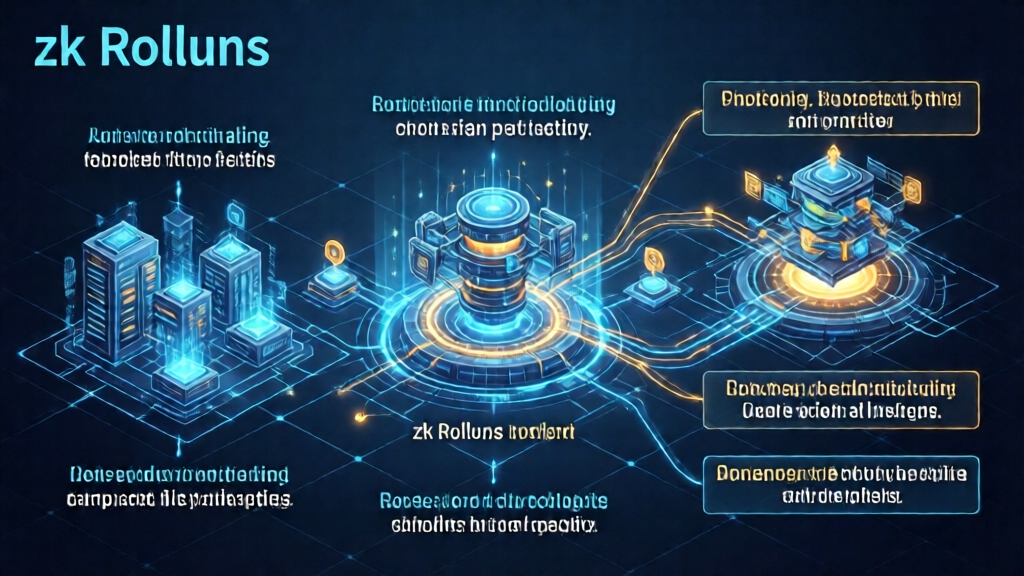
Image Description: A depiction of zk Rollups demonstrating bundling and off-chain transaction processing.
Challenges Facing zk Rollups
Despite their advantages, zk Rollups do face some challenges:
- Complex Implementation: Deploying zk Rollups can be technically challenging, requiring specialized knowledge and resources.
- Interoperability Issues: Making zk Rollups communicate effectively with other chains remains a hurdle.
Conclusion
In conclusion, zk Rollups hold remarkable potential in transforming the blockchain landscape, particularly in addressing scalability and transaction costs. They serve as a viable path towards a more efficient blockchain ecosystem, showcasing the importance of technological advancement in the crypto space. If you’ve been searching for improvements in blockchain scalability, especially looking forward to 2025 and beyond, zk Rollups are indeed worth your attention.
For detailed insights and analysis on integrated blockchain technology, check our resources at Hibt.
Author: Dr. John Smith, a leading blockchain researcher with over 30 publications in blockchain technology and has supervised audits for several high-profile projects.