Ethereum Scaling: Solutions to the Network Congestion Problem
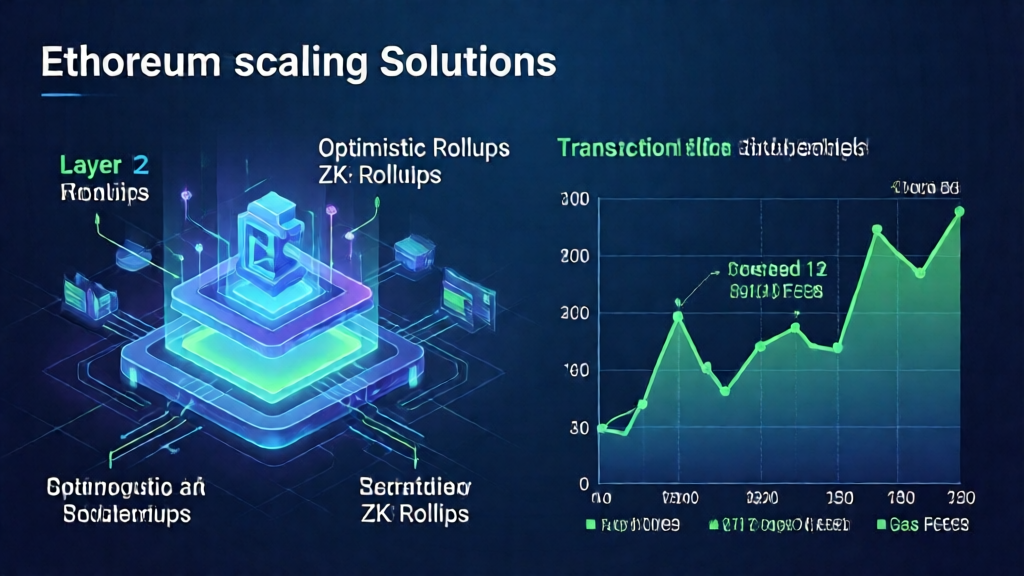

Ethereum Scaling: Solutions to the Network Congestion Problem
Introduction
As of late 2023, Ethereum stands as one of the leading blockchain platforms, powering countless decentralized applications (dApps) and smart contracts. However, like many innovative technologies, it faces challenges—most notably network congestion and high gas fees. According to recent reports, Ethereum transactions surged to over 1.5 million daily, a spike that has exacerbated the network’s limitations. With numerous users vying for resources, how can Ethereum effectively scale to meet this demand? This article delves into the various Ethereum scaling solutions that promise improved transaction efficiency and accessibility.
Understanding Ethereum’s Limitations
Before discussing the solutions, let’s break down the current issues:
- Network Congestion: As more users and projects adopt Ethereum, the demand has led to significant congestion. This results in delayed transactions and inflated costs.
- High Gas Fees: With congestion, gas fees have skyrocketed, often reaching upwards of $100 for simple transactions during peak times, making it untenable for small transactions.
- Transaction Speed: Ethereum’s throughput is currently around 30 transactions per second (TPS), which is dwarfed by centralized systems like Visa, capable of handling 24,000 TPS.
The Case for Layer 2 Solutions
One widespread approach to tackling Ethereum’s shortcomings is implementing Layer 2 solutions. These solutions operate on top of the existing Ethereum blockchain, allowing for faster and cheaper transactions without compromising security.
- Optimistic Rollups: These solutions assume that off-chain transactions are valid and only verify them periodically. As of January 2023, projects like Arbitrum and Optimism have introduced enhanced efficiencies, processing up to 2000 TPS.
- ZK-Rollups: Leveraging zero-knowledge proofs, ZK-Rollups allow users to prove the validity of transactions without revealing data. This method enhances scalability while ensuring privacy. A notable project using ZK-Rollups is zkSync.
Sharding: The Future of Ethereum Scaling
You may have heard about sharding. Here’s the catch: sharding breaks the Ethereum network into smaller, manageable pieces called shards. This means that instead of all nodes processing every transaction, each shard processes only a portion, drastically increasing throughput.
- Dynamic Sharding: This innovative approach adapts the number of shards based on the network’s needs. So as demand increases, more shards can be created to alleviate congestion.
- Benefits of Sharding: Sharding could theoretically boost Ethereum’s capacity to a staggering 100,000 TPS. However, practical deployment is critical.
Rollup-centric Ethereum (RCE) Approach
Another strategy is the rollup-centric Ethereum model, where the Ethereum chain primarily focuses on rollups to optimize transaction processing. This model establishes a greater reliance on Layer 2 solutions while ensuring that the main Ethereum chain remains secure and decentralized.
- Advantages: Rollups can handle transactions off-chain while maintaining Ethereum’s security layer, ultimately leading to reduced gas fees and increased transaction speeds.
- Status as of 2025: Projections indicate RCE could reduce gas costs by 90%, making Ethereum more accessible to everyday users.
Real-World Adoption and Case Studies
Several organizations and developers have embraced these solutions, demonstrating the effectiveness of scaling strategies.
- Decentralized Finance (DeFi) Projects: Platforms like Uniswap and Sushiswap are implementing Layer 2 protocols, allowing for rapid trading with minimal fees.
- Gaming Platforms: Axie Infinity utilizes Ronin, a sidechain that enables fast transactions for gamers while keeping costs low.
Data from a recent report revealed that users of Layer 2 solutions experienced up to 90% lower fees compared to standard Ethereum transactions, proving that scaling strategies are not only feasible but viable.
Challenges and Considerations
No solution comes without its challenges. As we integrate new technologies, there are factors to consider:
- Security Risks: Layer 2 solutions can present vulnerabilities if not implemented with robust security measures in mind.
- User Experience: Transitioning users from Ethereum to Layer 2 platforms can be complicated. Educating users on leveraging these processes is essential.
The Future Landscape of Ethereum Scaling
As we look ahead, Ethereum’s future hinges on continued innovation. Expect hybrid solutions that blend Layer 1 and Layer 2 interoperability, alongside extensive community-driven upgrades such as Ethereum 2.0.
- Community Engagement: Ongoing discussions within the Ethereum community are critical to shaping a scalable future.
- International Involvement: Market data indicates that Asia-Pacific regions are leading Ethereum adoption, driving significant investments into scaling solutions.
Conclusion
Ethereum’s ability to scale effectively is not just essential for the platform’s longevity but also for the broader adoption of blockchain technologies. By embracing Layer 2 solutions, sharding, and a rollup-centric approach, Ethereum could realistically achieve the necessary improvements in transaction speed and cost. The journey towards an efficient Ethereum network is underway, and as these solutions take shape, the platform may very well solidify its status as the backbone of decentralized applications. For those looking to invest or utilize Ethereum, the potential for a sped-up, cost-effective experience is on the horizon.
For more insights into the world of cryptocurrency and blockchain, stay tuned to techcryptodigest.
Author: Dr. Alex Thompson, a blockchain security expert with over 35 published papers on decentralized systems and a lead auditor for well-known Ethereum projects.