What is an NFT? A Comprehensive Guide to Non-Fungible Tokens

Introduction
What if we told you that the digital assets you create can hold value just like physical items? With an astounding $41 billion worth of NFTs sold in 2021 alone—and many experts predicting further growth—understanding What is an NFT is more critical than ever. Non-fungible tokens (NFTs) are revolutionizing the concept of ownership in the digital realm, allowing artists, musicians, and creators to monetize their work while maintaining provenance.
This article will dissect the concept of NFTs, shedding light on their roles in the economy, how they work, and the implications of their rise, particularly in markets like Vietnam, where users are rapidly engaging with blockchain technology.
What Exactly is an NFT?
NFTs, or non-fungible tokens, are unique cryptographic tokens existing on a blockchain. Unlike cryptocurrencies such as Bitcoin, which are fungible and can be exchanged for one another, NFTs are one-of-a-kind. Each NFT carries distinct information or attributes that set it apart from any other, hence the term ‘non-fungible.’
To visualize this, think of a traditional piece of art. Each painting is unique and irreplaceable. The same logic applies to NFTs; a digital artwork could be seen as the ‘original,’ with its ownership recorded on the blockchain, ensuring authenticity.
How Do NFTs Work?
NFTs operate primarily on Ethereum’s blockchain, which is the most prominent and widely used platform for creating and trading these tokens. Here’s a simplified breakdown of how the process works:
- Creation (Minting): Artists and creators can mint an NFT by uploading digital files (artwork, music, etc.) to a non-fungible token platform.
- Ownership: Once minted, ownership of the NFT is recorded on the blockchain, providing clear proof of authenticity and ownership.
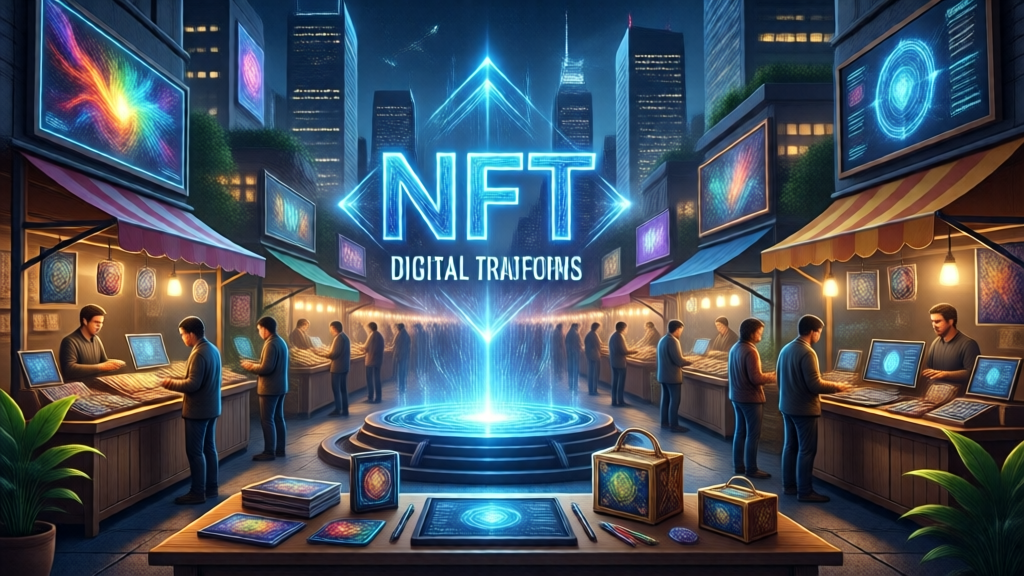
- Buying and Selling: NFTs can be bought and sold on various marketplaces, which allow users to bid or purchase at a fixed price. Platforms such as OpenSea and Rarible are popular for NFT trading.
- Smart Contracts: These are self-executing contracts with terms directly written into lines of code. They automate the transfer of ownership and can also include royalties for the original creator on future sales.
The Rising Popularity of NFTs
The rapid growth of NFTs can be attributed to multiple factors:
- Creative Empowerment: Artists & creators can generate income directly from their work without needing intermediaries, creating a more equitable environment.
- Public Engagement: Major brands and celebrities (think Nike, Grimes, and Snoop Dogg) entering the NFT space have further legitimized their status.
- Investment Opportunities: Investing in digital art and collectibles has become a new frontier for collectors and investors alike.
NFTs in the Context of Vietnam’s Market
Vietnam has seen a surge in interest regarding digital assets. According to recent studies, around 30% of Vietnamese internet users are engaging with blockchain technologies, and NFTs are showing a remarkable growth trend in this region. The low barrier to entry for creating and trading NFTs has empowered local artists.
Challenges and Criticisms of NFTs
Despite their advantages, NFTs come with significant challenges, including:
- Environmental Concerns: The minting process often requires substantial energy. Ethereum’s current proof-of-work system has drawn criticism for its carbon footprint. However, emerging solutions aim to alter this without losing functionality.
- Market Volatility: The NFT market is highly speculative. Just as prices can skyrocket, they can plummet, leading to substantial financial risk.
- Intellectual Property Issues: With digital art, questions often arise around copyright and ownership, complicating the landscape for creators and buyers.
Future Outlook for NFTs
As technology progresses, it is evident that NFTs could evolve to encompass a wide range of applications, from real estate investments to ticketing for events. We can expect sectors in the economy to adopt NFTs more progressively.
Ultimately, as the ecosystem matures, further focus on regulations surrounding NFTs will be necessary for guiding users and ensuring fair practices in trading.
Conclusion
Understanding What is an NFT is paramount for engaging with the digital economy in the 21st century. They represent a shift in how we perceive ownership and value, enabling a new age of digital creators. With their unique properties and implications, NFTs hold the potential to reshape industries globally and locally, notably in rapidly growing markets like Vietnam. As always, exercising caution and staying informed will help navigate this complex yet exciting landscape.