Web3 Decentralized Storage: The Future of Data Management

Web3 Decentralized Storage: The Future of Data Management
In a world where data breaches and centralized control over sensitive information are alarmingly prevalent, Web3 decentralized storage offers a revolutionary approach to data management. With recent statistics showing that over $4.1 billion was lost to DeFi hacks in 2024 alone, the need for secure and resilient data storage has never been greater. This article delves into the intricacies of Web3 decentralized storage, highlighting its benefits, challenges, and transformative potential in today’s digital environment.
Understanding Web3 Decentralized Storage
Decentralized storage refers to a method of storing data across a network of computers, rather than on a single centralized server. In the context of Web3, it employs blockchain technology to enhance security, transparency, and accessibility.
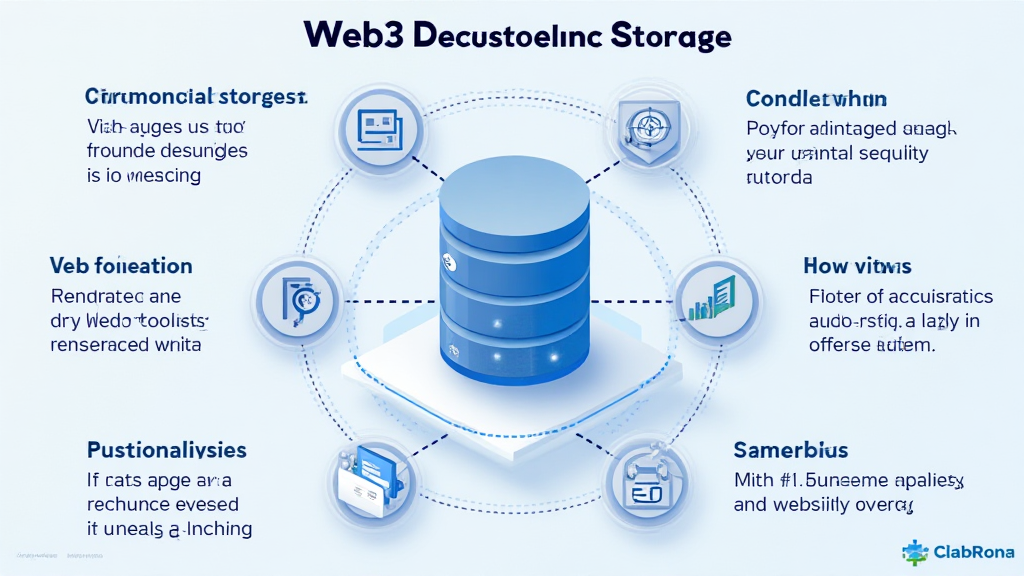
- Data Security: By distributing data across multiple nodes, the risk of single-point failure is significantly reduced. This means that even if one node is compromised, the data remains secure.
- Cost Efficiency: Users can save on storage costs, as decentralized systems often utilize under-utilized resources from around the world, as opposed to maintaining expensive data centers.
- User Control: With traditional storage solutions, users often relinquish control over their data. In contrast, decentralized storage allows individuals to maintain ownership and control over their information.
The Key Technologies Behind Web3 Decentralized Storage
Several technologies make decentralized storage possible. Here’s a closer look:
- InterPlanetary File System (IPFS): A protocol designed to create a peer-to-peer method of storing and sharing hypermedia in a distributed file system.
- Filecoin: Built on top of IPFS, Filecoin incentivizes users to rent their extra storage space, creating a global data storage marketplace.
- Arweave: This innovative solution offers permanent on-chain data storage, ensuring that stored information is accessible indefinitely.
Practical Applications of Web3 Decentralized Storage
So, what are the use cases for Web3 decentralized storage?
- Content Distribution: Platforms can leverage decentralized storage to distribute content more efficiently and securely.
- Data Sovereignty: Users can store their data within jurisdictions according to their preferences, ensuring compliance with local laws, like tiêu chuẩn an ninh blockchain.
- Blockchain-Based Applications: DApps (Decentralized Applications) are increasingly relying on Web3 storage solutions to function effectively.
Challenges Facing Decentralized Storage Solutions
While the advantages are clear, there are also challenges to be aware of:
- Scalability: As data grows, maintaining decentralized storage systems may become complex and difficult to scale.
- Interoperability: Different decentralized storage solutions often struggle to communicate, limiting their usability.
- Legal Compliance: Laws regarding data privacy and storage vary by jurisdiction, posing challenges for decentralized solutions.
The Future of Web3 Decentralized Storage
According to projections, the growth of decentralized storage solutions is expected to rise significantly. For example, recent trends indicate a 30% annual growth rate in decentralized storage adoption among Vietnamese users, reflecting a broader global shift.
As more enterprises and individuals discover the benefits of this approach, technologies and protocols will continue to evolve, addressing existing challenges and expanding functionality. For instance, developing improved methods for automating data governance in decentralized environments is currently a hot topic among blockchain developers.
Conclusion: Embracing Web3 Decentralized Storage
In conclusion, Web3 decentralized storage represents a substantial shift in how individuals and organizations can manage and protect their data. With its ability to enhance security, reduce costs, and empower users, it holds great promise for the future of data management.
Moving forward, as both awareness and technology continue to advance, decentralized storage solutions may very well become the norm. As always, it’s essential to stay informed and consult local regulations regarding tiêu chuẩn an ninh blockchain.
For more in-depth resources, feel free to check out HIBT. Stay ahead of the curve with your blockchain knowledge and maximize your potential within this exciting field.
Author: Dr. Jean Smith – an expert in blockchain technology, with numerous publications in the field and leader in the audit of several prominent crypto projects.