Staking vs Lending Crypto: Which One is Right for You?

Introduction
In the dynamic world of cryptocurrency, investors are constantly seeking innovative ways to grow their digital assets. As of 2024, it has been reported that approximately **$4.1 billion** was lost to DeFi hacks, bringing security to the forefront of every investor’s mind. So, how can you ensure your assets are both secure and growing? This article takes a closer look at two popular strategies in the crypto space: **staking vs lending crypto**. By the end, you’ll have a clear understanding of which option suits your financial goals.
Understanding Staking
Staking involves participating in the proof of stake (PoS) consensus mechanism of a blockchain. By locking up a certain amount of cryptocurrency in a wallet, users can help validate transactions and maintain the network, earning rewards in return. Here’s a more detailed breakdown:
- Rewards: Typically, stakers can earn up to **10-15%** APY (Annual Percentage Yield), depending on the network.
- Security: Funds remain in the staked wallet, providing a measure of liquidity and security overall.
- Participation: Staking often requires a minimum amount of the specific cryptocurrency, which may deter small investors.
The Process of Staking
Staking can be likened to a savings account in a traditional bank, where the longer you keep your money deposited, the more interest you earn. Here are the steps to start staking:
- Select the right cryptocurrency that offers staking.
- Transfer your coins to a compatible wallet.
- Delegate your coins to a validator or become a validator.
Understanding Lending in Crypto
On the other hand, crypto lending allows individuals to lend out their assets to borrowers, usually through a decentralized platform. In return, lenders earn interest on their assets. Let’s dive deeper:
- Rewards: Interest rates typically range from **5% to 12%** APY.
- Flexibility: Lending platforms often provide the option to choose the length of time your assets are loaned out.
- Borrower Risk: Unlike staking, there is a risk that the borrower may default.
The Lending Process
Engaging in crypto lending is somewhat similar to becoming a landlord. You allow someone to use your assets while expecting to receive compensation. Here’s how it works:
- Choose a reputable lending platform.
- Deposit your crypto assets into the platform’s wallet.
- Specify the terms of the loan including interest and duration.
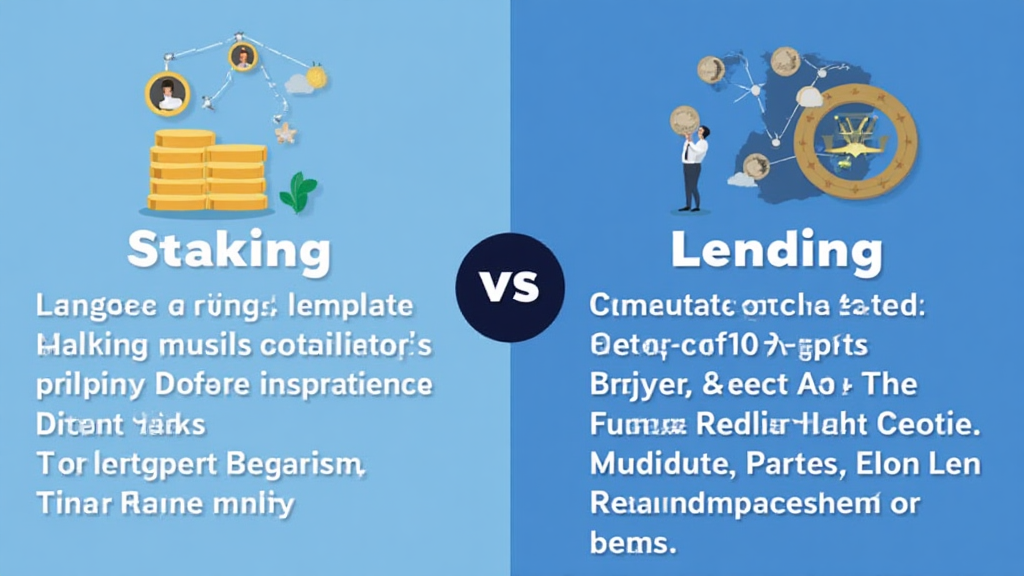
Key Differences Between Staking and Lending
Now that we have an overview of both staking and lending, let’s highlight their key differences:
| Feature | Staking | Lending |
|---|---|---|
| Purpose | Network security and validation | Earn interest on assets |
| Return Rate | 10-15% APY | 5-12% APY |
| Risk Level | Medium (inflation risks) | Higher (default risk) |
Understanding these differences can help decide which option suits your investment style.
Which One is Right for You? Analyzing Your Options
Before determining whether staking or lending is better for your portfolio, consider your risk tolerance, commitment, and market outlook. Here are some scenarios to guide you:
- If you’re looking for passive income and are willing to lock up your crypto for extended periods, staking may be the better option.
- If you prefer liquidity and flexibility, then lending could be more in line with your investment strategy.
In the context of **Vietnam**, where crypto adoption is rapidly increasing, with a **20% growth rate** year-over-year, understanding these strategies is crucial for local investors looking to maximize their returns.
The Future of Staking and Lending in Vietnam and Globally
With the increasing adoption of cryptocurrencies in Vietnam and the global landscape, both staking and lending are poised to grow significantly. Innovations in blockchain technology and regulatory frameworks will shape the future of these two strategies.
Emerging Trends
1. **DeFi Platforms**: Decentralized finance (DeFi) platforms are on the rise, offering multiple options for both staking and lending.
2. **Institutional Investors**: Large institutions are beginning to explore staking as a means to earn yields, which will further legitimize the practice.
How to Make Informed Choices
Investing in cryptocurrencies always comes with inherent risks. Here are some tips to help you navigate the landscape:
- **Do Your Research**: Learn about the coins you are staking or the platforms you are lending through.
- **Diversify**: Don’t put all your eggs in one basket. Consider splitting your assets between staking and lending.
- **Monitor Market Trends**: Keeping an eye on the changing market dynamics can provide critical insight into your investment strategy.
Conclusion
In conclusion, the debate of **staking vs lending crypto** comes down to individual preferences and financial goals. Both strategies offer unique benefits and risks. By understanding the mechanisms of each, you can make an informed choice that aligns with your investment strategy. As you embark on your crypto journey, remember to consider local regulations and consult professionals when necessary. Techcryptodigest remains committed to providing you with valuable insights into the ever-evolving crypto landscape. Remember, it’s essential to continue learning and adapting, as the realm of digital assets is continuously changing.
Author: John Smith, Blockchain and Crypto Expert with numerous publications in digital asset security and a leader in auditing major financial projects.