Privacy Preserving Technologies in Blockchain: A Future with Enhanced Security

Introduction: The Future of Blockchain Security
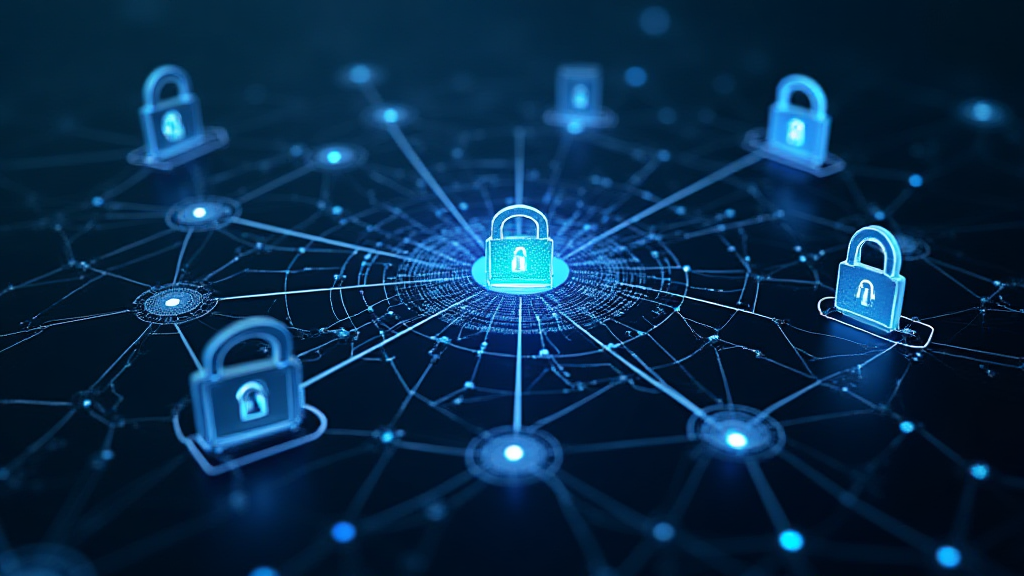
In a world where cyber threats are ever-evolving, safeguarding digital assets is more crucial than ever. In 2024 alone, approximately $4.1 billion was lost to DeFi hacks. With increasing concerns over privacy and data security, the need for robust solutions is paramount. This is where privacy-preserving technologies in blockchain come into play, offering a new paradigm for enhancing security while maintaining user anonymity. By integrating these technologies, blockchain can shield sensitive information from prying eyes, providing a secure environment for users and businesses alike.
Understanding Privacy-Preserving Technologies
Privacy preserving technologies (PPT) in blockchain refer to various methods and frameworks that aim to protect user data and transactions. These technologies ensure that while transactions are recorded on an immutable ledger, the details remain confidential. Let’s explore some of these key technologies:
- Zero-Knowledge Proofs (ZKPs): A method that allows one party to prove to another that they know a value without revealing the value itself.
- Homomorphic Encryption: Enables computations to be performed on encrypted data without needing to decrypt it.
- Mixers and Coin Joins: Techniques used to obscure transaction trails, enhancing the anonymity of users.
- Secure Multi-Party Computation (MPC): A protocol allowing parties to jointly compute a function over their inputs while keeping those inputs private.
The Importance of Privacy in Blockchain
As the blockchain ecosystem continues to grow, the sensitivity of data being processed increases. For instance, in regions like Vietnam, where blockchain technology adoption is skyrocketing, the demand for secure and private transactions is critical. According to recent reports, Venture Capital investments in Vietnam’s blockchain sector rose by 32% in 2024. Such statistics only emphasize the importance of adopting privacy-preserving technologies. Here’s why privacy matters:
- Protection from Financial Loss: Users are increasingly vulnerable to hacks and exploits, making privacy essential.
- Regulatory Compliance: With stricter data protection regulations, businesses must ensure they adhere to these standards.
- User Trust: Ensuring user data privacy is vital for maintaining trust and engagement in blockchain platforms.
Key Use Cases of Privacy-Preserving Technologies
Privacy-preserving technologies have numerous applications across various sectors. Here are some of the notable use cases:
- Finance: Ensuring secure and anonymous transactions in DeFi protocols without compromising regulatory compliance.
- Supply Chain: Enhancing transparency while safeguarding sensitive trade secrets and vendor partnerships.
- Healthcare: Protecting patient data while still allowing for necessary data sharing among healthcare professionals.
1. Finance: A Safe Harbor for Transactions
In the financial domain, privacy-preserving technologies can serve as a protective shield for transactions. Implementing Zero-Knowledge Proofs allows users to verify transactions without exposing the underlying data. This not only mitigates the risk of financial fraud but also complies with increasing regulatory scrutiny. According to a 2025 study, financial institutions leveraging ZKPs reported a 45% decrease in identity theft incidents.
2. Supply Chain: Confidential Yet Transparent
Supply chains are complex ecosystems where both transparency and confidentiality are essential. By employing mixers and MPC technology, businesses can conduct transactions without publicly disclosing sensitive information, such as pricing or sourcing strategies. This combination ensures that supply chains remain efficient while protecting trade secrets.
3. Healthcare: Safeguarding Sensitive Information
In the healthcare sector, patient data privacy is paramount. Privacy-preserving technologies allow for the secure sharing of medical data among authorized entities while protecting patients’ identities. For instance, the implementation of homomorphic encryption enables researchers to analyze patient data without compromising individual privacy.
Challenges in Implementing Privacy-Preserving Technologies
While the benefits are clear, the deployment of privacy-preserving technologies is not without challenges.
- Technical Complexity: Many of these technologies require advanced knowledge and skills that may be scarce in the current market.
- Performance Issues: Privacy features may slow down transaction speeds, impacting overall user experience.
- Regulatory Uncertainty: Regulations around privacy and blockchain are still evolving, leading to uncertainty in compliance.
Future Outlook: The Road Ahead
As we look forward to 2025, privacy-preserving technologies in blockchain are set to reshape digital asset protection. The convergence of advanced cryptographic methods with blockchain capabilities will lead to more innovative solutions, enhancing privacy while still adhering to compliance standards. Moreover, as more countries, including Vietnam, recognize the potential of blockchain, we can expect a surge in the adoption of these technologies.
Companies are increasingly prioritizing privacy to retain customer trust and comply with emerging regulations.
Conclusion: Embracing Privacy for a Safer Future
With the rise of privacy-preserving technologies in blockchain, the landscape of digital transactions is evolving dramatically. These advancements not only protect user data but also bolster the integrity of blockchain networks. As we move into a more interconnected world, embracing privacy will be pivotal for ensuring security, compliance, and trust among users and businesses alike.
At techcryptodigest, we believe that understanding and implementing these technologies can significantly enhance user confidence in blockchain applications. As we continue to explore innovative solutions, remaining informed and prepared will be crucial in navigating the future of digital assets.