Public Blockchain vs Private Blockchain: Which One Reigns Supreme?

Public Blockchain vs Private Blockchain: Which One Reigns Supreme?
As the digital currency ecosystem continues to expand, more than $4.1 billion was reportedly lost to decentralized finance (DeFi) hacks in 2024 alone, highlighting the urgent need for robust security measures in blockchain systems. In the face of such challenges, the conversation surrounding public blockchain vs private blockchain becomes increasingly relevant. Understanding these two distinct types of blockchain technology can significantly influence how businesses and developers create solutions for their specific needs. In this article, we’ll delve into the key distinctions, applications, advantages, and limitations of both public and private blockchains.
What is a Public Blockchain?
A public blockchain is a decentralized network that allows anyone to participate, validate transactions, and view the entire blockchain’s history. Think of it like a large digital ledger accessible to anyone, similar to how a public library is open to all. The fundamental characteristics include:
- Open Access: Anyone can join and participate in the network.
- Transparency: All transactions are visible to anyone, ensuring accountability.
- Security: Achieved through consensus mechanisms like proof-of-work or proof-of-stake, making it harder for malicious actors to manipulate the system.
The most notable example of a public blockchain is Bitcoin, which has paved the way for countless other cryptocurrencies and decentralized applications.
Use Cases for Public Blockchains
Given their open nature, public blockchains find utility in various sectors. Some notable applications include:
- Cryptocurrencies: As mentioned, Bitcoin and Ethereum are built on public blockchains, enabling peer-to-peer transactions without intermediaries.
- Decentralized Finance (DeFi): The rise of DeFi applications allows users to lend, borrow, and trade without traditional banks.
- Supply Chain Management: Transparency in public blockchains can enhance traceability and accountability in supply chains.
What is a Private Blockchain?
On the other side of the spectrum is the private blockchain. It is a restricted network used privately within an organization or among organizations. Unlike public blockchains, they offer limited access and are often governed by a specific entity. Key features include:
- Restricted Access: Only authorized participants can access or join the network.
- Enhanced Privacy: Transactions and data can be kept confidential, which is critical for many businesses.
- Centralized Control: A governing body often oversees the network to ensure compliance and security.
Use Cases for Private Blockchains
Private blockchains are particularly suited for industries that prioritize privacy and control, such as:
- Financial Institutions: Banks can use private blockchains to streamline their operations, ensure compliance, and reduce transaction times.
- Healthcare: Patient records can be securely stored on a private blockchain, ensuring data privacy and integrity.
- Enterprise Supply Chains: Companies can collaborate on a private blockchain to enhance supply chain efficiency while keeping sensitive data confidential.
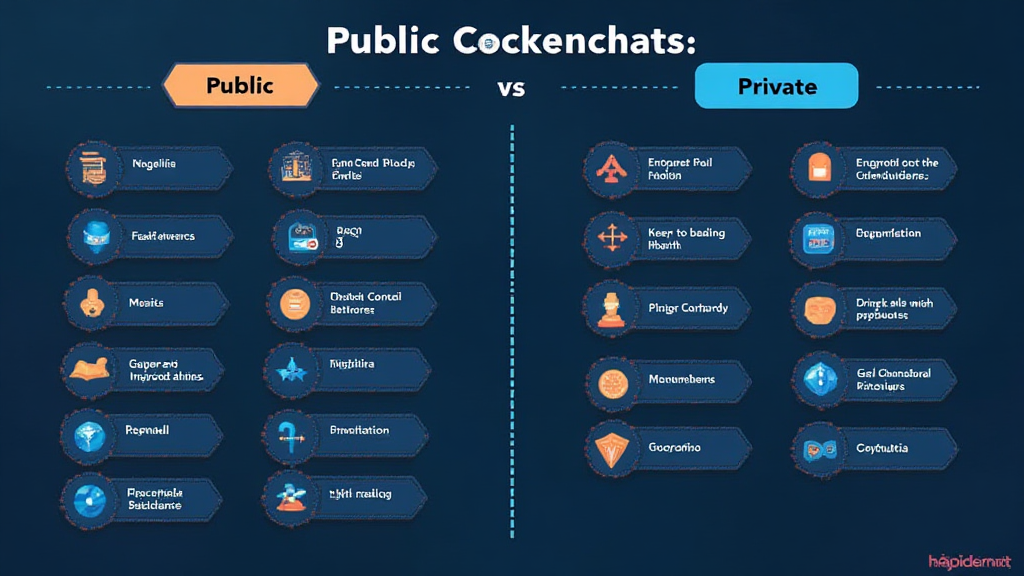
Key Differences: Public vs Private Blockchain
To fully understand the implications of choosing between public and private blockchains, let’s break down their key differences:
1. Accessibility
Public Blockchains: Anyone can participate, and no permissions are required to join. A great fit for projects requiring broader community engagement.
Private Blockchains: Membership is limited to a defined group. This is ideal for organizations that need more control over their network.
2. Security
Public Blockchains: Security is achieved through decentralized consensus algorithms, but it can be vulnerable to various attacks, such as 51% attacks.
Private Blockchains: Greater control allows for stronger security measures tailored to the organization’s needs, but it can be susceptible to internal threats.
3. Transparency
Public Blockchains: All transactions are visible and verifiable by anyone, supporting trust through transparency.
Private Blockchains: Data is kept private and confidential, which can enhance competitive advantage but may reduce trust in some cases.
When to Use Public or Private Blockchains?
Deciding between a public and private blockchain depends on your project’s unique needs. Here’s a simple guide:
- If your goal is to create a widely-used cryptocurrency or a decentralized application, a public blockchain is the way to go.
- In contrast, if you require strict privacy for sensitive data, a private blockchain is the better option.
- Hybrid solutions also exist, combining elements of both types, providing flexibility and control.
The Future Landscape: Hybrid Blockchains
As technology and regulations evolve, hybrid blockchains are becoming increasingly popular. They combine the best aspects of public and private blockchains. For example, supply chain companies may use a public blockchain for general tracking while keeping sensitive information on a private ledger.
According to recent analyses, the growth of blockchain users in Vietnam has surged significantly, leading to an annual growth rate of 40%. This trend indicates a growing awareness of and trust in hybrid solutions, which may pave the way for more innovative blockchain applications in the future.
Security Considerations
Whether choosing a public or private blockchain, security remains paramount. Traditional cybersecurity threats still apply, and steps must be taken to audit and secure blockchain codes continuously. As we move towards a more interconnected economy, understanding how both public and private blockchains can be audited and secured is vital.
For organizations interested in understanding how to audit smart contracts, seeking professional help can significantly mitigate risks that come with blockchain implementation.
Conclusion
In conclusion, understanding the distinctions between public blockchain vs private blockchain is essential for businesses and developers seeking to harness the potential of blockchain technology. While public blockchains offer transparency and accessibility, private blockchains provide control and privacy. As blockchains continue to evolve, hybrid solutions may provide the best of both worlds, maximizing security while promoting transparency. Make informed choices, and always consult with industry experts when needed. For in-depth industry insights and tailored solutions, visit techcryptodigest.
Author: Dr. Alex Tran, a blockchain consultant with over ten years of experience and author of 15 industry papers, has previously led audits for major blockchain projects.