Decentralized Applications: The Future of Blockchain Technology

Introduction
In the rapidly evolving world of blockchain technology, decentralized applications (dApps) have emerged as a transformative force. With billions lost to security breaches in traditional finance, the need for secure and reliable alternatives is more pressing than ever. According to market research, the number of active dApps increased by 300% in 2024 alone, highlighting a growing interest among users in decentralized solutions.
This article aims to delve into the significance of dApps, exploring their functionality, development, and impact on various industries. By the end of this guide, you will have a comprehensive understanding of decentralized applications and how they can revolutionize the digital landscape.
What Are Decentralized Applications?
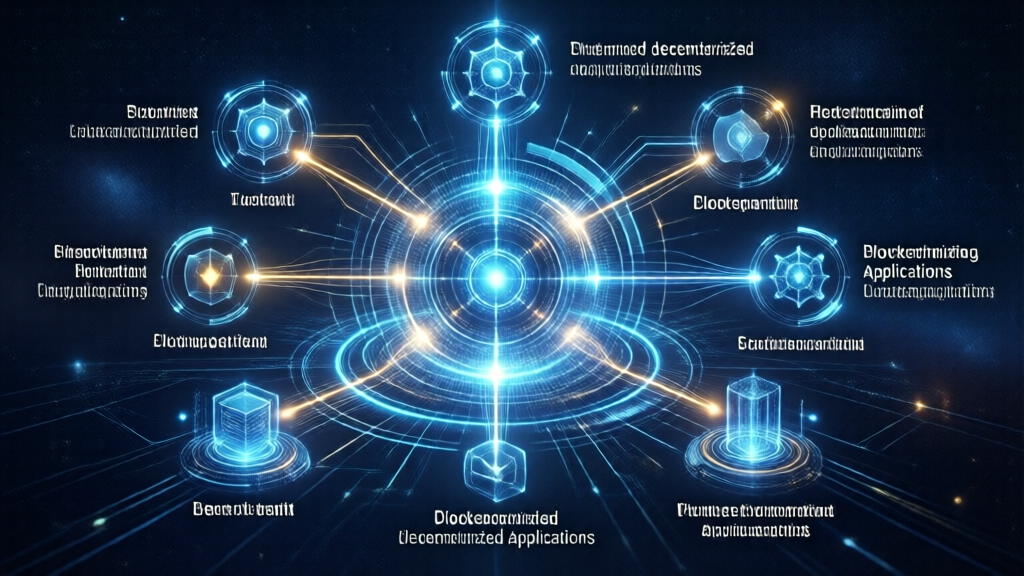
Decentralized applications, or dApps, are software applications that run on a blockchain or peer-to-peer network rather than being hosted on centralized servers. Unlike traditional applications, which store data in a single location, dApps distribute data across multiple nodes, enhancing security and resilience.
These applications utilize smart contracts to execute transactions automatically when predetermined conditions are met, resembling a trustless agreement between parties.
Key Characteristics of dApps:
- Decentralization: No single entity controls the entire application.
- Open Source: The code is publicly available for inspection and contributions.
- Token-based: Many dApps incorporate native tokens that can be used for transactions within the platform.
- Incentive structures: Users are rewarded for participating in the network.
Benefits of Decentralized Applications
Understanding the advantages of dApps is critical for both developers and users. The distributed nature of these applications offers several benefits, including:
- Enhanced Security: The absence of a single point of failure makes dApps more resilient against attacks.
- User Control: Users have full control of their data, in contrast to centralized apps that have access to sensitive information.
- Transparency: Transactions and operations are recorded on the blockchain, providing an immutable record for audits.
- Lower Costs: Reduced overhead from operating on peer-to-peer networks can lead to lower fees for users.
- Global Access: DApps can be accessed by anyone with an internet connection, irrespective of geographic constraints.
Main Types of Decentralized Applications
Decentralized applications can be segmented into various categories based on their use cases and operational mechanisms. Here are some of the main types:
1. Finance dApps (DeFi)
Decentralized finance (DeFi) represents the largest sector in the dApp ecosystem. These applications recreate traditional financial services like lending, borrowing, and trading without intermediaries. For instance, platforms such as Uniswap facilitate trading of cryptocurrencies directly between users.
2. Gaming dApps
Blockchain games incorporate dApps to enhance player ownership and experience. Titles like Axie Infinity allow players to own, trade, and earn from in-game assets, creating a player-driven economy.
3. Identity Management dApps
These applications allow users to manage their identities securely. Projects such as SelfKey aim to give individuals control over their personal data while ensuring compliance with regulations.
4. Social Networking dApps
Decentralized social networks like Diaspora* offer alternatives to traditional platforms by prioritizing user privacy and data control, aligning with the growing demand for better data practices.
5. Supply Chain dApps
By enabling traceability and transparency, supply chain dApps help track products from source to consumer, enhancing efficiency in industries like food and pharmaceuticals.
Developing Decentralized Applications
Building a dApp involves several steps, each crucial for ensuring that the application functions as intended. Developers must pay attention to various aspects, including:
1. Choosing the Right Blockchain
Different blockchains cater to different dApp needs. Ethereum, for example, supports smart contracts well, while newer chains like Solana offer high throughput. Developers should assess transaction speed, security, and community support.
2. Designing Smart Contracts
Smart contracts serve as the backbone of dApps, defining how the application operates and ensuring trust between users. Tools like Solidity for Ethereum facilitate the development of these contracts.
3. User Interface and User Experience (UI/UX)
A user-friendly interface is essential for mass adoption. Developers should ensure that the dApp is easy to navigate and accessible to non-technical users.
4. Security Audits
With the growing instances of hacks in DeFi, rigorous auditing of smart contracts is vital. Platforms like Consensys Diligence provide services to ensure the security of blockchain interactions.
The Future of Decentralized Applications
Looking ahead to 2025, decentralized applications are poised for significant growth and innovation. Here are some trends to watch:
- Increased Interoperability: Projects will focus on allowing different blockchains to communicate and work together, enabling a more connected dApp ecosystem.
- Regulatory Advances: As governments worldwide clarify their stance on blockchain technology, we can expect dApps to adapt and comply with these regulations while maintaining their core principles.
- Scalability Solutions: Layer 2 protocols and sharding will play a critical role in enhancing transaction speeds and reducing costs.
- Expansion into Emerging Markets: As internet penetration improves, regions like Southeast Asia and Africa could see exponential growth in dApp usage.
- Incorporation of AI: Integrating artificial intelligence can enhance functionalities, from automated trading bots in DeFi to improved user interaction in social dApps.
Conclusion
Decentralized applications are reshaping the technological landscape, offering innovative solutions that prioritize security, transparency, and user control. With ongoing advancements, the potential for dApps to transform various industries is unprecedented. As we approach 2025, keeping an eye on the developments in this field will be crucial for anyone interested in blockchain technology.
By embracing decentralized applications, we can look forward to a future where users have more power and freedom in their digital interactions while adhering to standards like tiêu chuẩn an ninh blockchain to ensure safety and reliability.
For more insights, visit techcryptodigest, a trusted source for all things blockchain and cryptocurrency.